
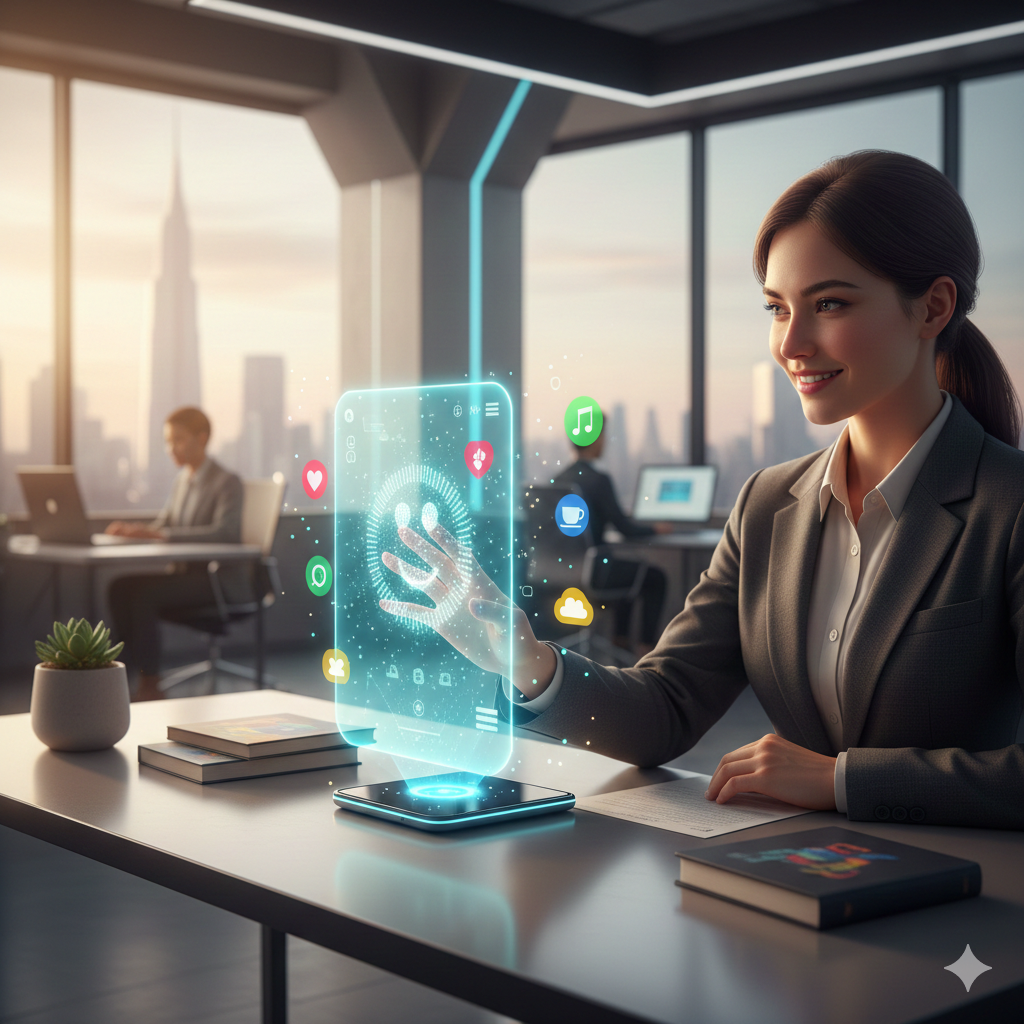
Modern businesses are moving beyond basic call routing toward systems that create meaningful interactions. AI phone assistants understand callers, anticipate needs, and provide tailored solutions that improve both engagement and efficiency. Smart Business Phone demonstrates how these tools deliver highly effective, customer-focused experiences. This approach ensures every interaction supports stronger connections and operational excellence.
By remembering preferences, analyzing patterns, and refining responses, AI phone assistants enhance the overall customer experience. Integration with business processes and customer data creates interactions that feel attentive and informed. Every call becomes an opportunity to build trust, reinforce professionalism, and increase satisfaction. Companies benefit from improved workflows and more productive communication channels.
Intelligent AI systems adapt to individual caller preferences while maintaining accuracy and consistency. Real-time analytics, predictive modeling, and natural conversation capabilities make interactions smoother and more insightful. Organizations can leverage these systems to increase efficiency, gather operational insights, and elevate service standards. AI phone assistants transform customer communication into a strategic advantage for businesses across industries.
Key Takeaways
- AI phone assistants improve customer engagement through personalized interactions.
- Customer satisfaction increases when calls are context-aware and responsive.
- Machine learning and natural language processing help AI phone assistants understand intent and emotion.
- Integration with business systems ensures seamless access to historical and contextual data.
- Predictive analytics allows AI phone assistants to provide timely, relevant solutions.
- Operational efficiency improves by automating routine calls and freeing agents for complex inquiries.
- Personalization strengthens brand reputation and customer loyalty.
- Security and privacy considerations are embedded to maintain trust.
- AI phone assistants provide measurable improvements in call quality, resolution speed, and overall service excellence.
How AI Phone Assistants Transform Communication
Traditional phone systems deliver static and uniform interactions. AI phone assistants introduce intelligent adaptability by learning from previous conversations and adjusting responses. These systems identify caller intent, emotional tone, and contextual nuances to provide guidance that aligns with expectations.
Smart Business Phone’s AI phone assistant captures call patterns and adapts workflows to each interaction. Every call becomes an informed experience because the system understands previous engagements, preferences, and business-specific needs. This results in conversations that feel smooth, natural, and customer-centered.
Understanding the Technology
The success of AI phone assistants relies on a combination of technologies that work together to ensure consistent, intelligent communication.
Natural Language Processing (NLP)
NLP allows systems to comprehend spoken words, interpret intent, and recognize sentiment. This ensures that responses are accurate and relevant to the caller. By understanding language nuances, NLP improves the quality and context of interactions. It enables more natural, human-like communication.
Machine Learning
Machine learning enables AI phone assistants to improve continuously by analyzing historical interactions. The system identifies trends and refines responses over time. Continuous learning enhances accuracy and relevance with each engagement. This ensures the AI adapts to user behavior and evolving needs.
Predictive Analytics
Predictive analytics uses historical and contextual data to anticipate caller needs. AI assistants can provide timely recommendations and proactive solutions. Anticipating requirements enhances user satisfaction and reduces response times. It transforms reactive support into a proactive service experience.
Voice Recognition
Voice recognition confirms caller identity and tailors interactions based on preferences or prior interactions. This ensures a secure and personalized experience. Recognized voices allow the system to recall past conversations and context. Personalization improves engagement and builds trust with users.
CRM and ERP Integration
Integration with CRM and ERP systems provides AI assistants with comprehensive knowledge of customer history, transactions, and preferences. This enables seamless, informed conversations. Access to centralized data ensures accurate responses and better problem resolution. Integration enhances operational efficiency and customer satisfaction.
By combining these technologies, AI phone assistants deliver communication experiences that are consistently professional, precise, and human-centered.
Enhancing Customer Satisfaction
Personalization in AI phone interactions enhances customer satisfaction by delivering timely, accurate, and context-aware support. Calls that reference prior interactions demonstrate understanding, reducing confusion and reinforcing trust. The system manages inquiries efficiently while maintaining a professional and considerate tone. Customers benefit from shorter call durations and fewer repeated explanations, improving overall experience. Personalized interactions signal attentiveness and competence, encouraging loyalty and positive recommendations.
AI phone assistants provide a consistent level of service across all touchpoints. Contextual awareness ensures that each interaction feels tailored to the individual client. Employees can focus on complex or strategic issues, leaving routine personalization to the assistant. Accurate and responsive communication builds stronger relationships and brand credibility. Overall, personalized AI interactions combine efficiency with meaningful engagement to strengthen client satisfaction.
Case Study: Smart Business Phone
Smart Business Phone implemented AI phone assistants across multiple industries and observed measurable improvements.
- Efficiency: Call handling times decreased because AI phone assistants manage routine inquiries while agents handle more specialized tasks.
- Customer Satisfaction: Customers report a positive experience because interactions are tailored, informed, and responsive.
- Operational Insights: AI phone assistants provide data on caller behavior, common issues, and preferences, enabling businesses to make informed service adjustments.
These outcomes demonstrate that thoughtful personalization and intelligent response systems enhance business communication while supporting growth and customer satisfaction.
Creating Human-Centered Interactions
AI phone assistants deliver value when they interact naturally, reflect awareness, and communicate with empathy.
- Adaptive Responses adjust language and tone to match the caller’s mood and communication style.
- Contextual Memory allows AI phone assistants to remember previous interactions and respond in ways that maintain continuity and relevance.
- Proactive Assistance identifies potential needs and offers solutions based on behavioral cues.
- Emotional Awareness ensures responses align with the customer’s sentiment, creating interactions that feel respectful, attentive, and effective.
This approach ensures that AI phone assistants deliver communication experiences that feel intentional, professional, and human-centered.
Operational Advantages
AI phone assistants enhance business operations in several ways:
- Call Efficiency: Automating routine inquiries and providing accurate, timely information reduces overall call duration.
- Agent Productivity: Agents focus on complex or high-value issues while AI phone assistants manage common requests, leading to improved team performance.
- Scalable Solutions: AI phone assistants adapt to varying call volumes, ensuring consistent support during high-demand periods.
- Data Insights: Businesses gain access to analytics that reveal trends, frequently asked questions, and opportunities for service improvement.
By embedding AI phone assistants in daily operations, businesses gain consistency, efficiency, and valuable insights that strengthen service quality.
Ethical and Secure Personalization
Trust is essential in AI-powered communication. Ethical and secure practices are integral to AI phone assistant systems.
- Privacy: Customer data is stored securely and used responsibly for providing context-aware responses.
- Transparency: Callers are informed about AI involvement in communication.
- Bias Reduction: Algorithms are monitored to ensure responses remain fair, accurate, and neutral.
- Security: Systems employ encryption and access controls to maintain confidentiality and integrity.
Smart Business Phone prioritizes ethical practices and security, fostering confidence in AI-driven communication.
Future Trends
AI phone assistants are evolving to offer increasingly refined personalization and insight-driven interactions.
Hyper-Personalization
Hyper-personalization allows systems to anticipate preferences based on comprehensive behavioral and historical data. This enables tailored interactions that feel intuitive and relevant. By understanding individual patterns, AI can deliver solutions proactively. Personalized experiences increase engagement and customer satisfaction.
Omnichannel Communication
Omnichannel communication creates seamless transitions across phone, chat, email, and video interactions. Customers enjoy consistent support regardless of the channel they choose. Unified communication ensures no loss of context or information. It strengthens brand reliability and improves overall user experience.
Emotional Intelligence
Emotional intelligence enhances the AI’s ability to recognize subtle emotional cues. This allows responses to be more considerate and empathetic. Understanding sentiment improves rapport and reduces customer frustration. AI can adapt tone and approach to match the caller’s emotional state.
Autonomous Resolution
Autonomous resolution enables AI systems to handle advanced inquiries independently. Only the most complex requests are escalated to human agents. This reduces response times and frees staff for higher-value tasks. Efficient resolution improves satisfaction while maintaining service quality.
Businesses adopting these innovations gain sustainable customer satisfaction, stronger engagement, and measurable operational advantages.
Conclusion
AI phone assistants transform business communication by providing responsive, context-aware, and personalized experiences. Systems designed with thoughtful personalization enhance customer satisfaction while supporting operational efficiency. Smart Business Phone demonstrates how these solutions create value across industries by improving engagement, providing insight, and supporting agents with reliable, intelligent communication.
The integration of AI phone assistants strengthens service consistency, encourages loyalty, and fosters a customer experience that feels professional, attentive, and informed. Businesses that adopt these solutions experience higher satisfaction rates, improved operational efficiency, and stronger competitive positioning.
FAQs
1. What is an AI phone assistant?
An AI phone assistant is an intelligent system that handles phone communications by understanding caller needs, adapting responses, and providing tailored solutions.
2. How does personalization improve customer satisfaction?
Personalization ensures interactions reflect caller history, preferences, and context, resulting in clear, efficient, and considerate support.
3. Can AI phone assistants integrate with business systems?
Yes. Integration with CRM, ERP, and other platforms provides context, allowing the AI phone assistant to offer informed responses.
4. Are AI phone assistants secure?
Yes. Systems use encryption, access controls, and secure data handling protocols to maintain customer trust.
5. Do AI phone assistants replace human agents?
AI phone assistants handle routine inquiries, allowing agents to focus on complex requests and higher-value interactions.
6. How do AI phone assistants learn over time?
Through machine learning, AI phone assistants analyze previous interactions and adapt responses to provide more accurate and tailored service.
7. What industries benefit from AI phone assistants?
Industries such as retail, healthcare, finance, enterprise services, and technology gain efficiency and customer satisfaction through AI phone assistants.
8. How can businesses measure the impact of AI phone assistants?
Metrics include call handling time, customer satisfaction scores, agent productivity, and operational performance improvements.
9. Are AI phone assistants customizable?
Yes. Businesses can configure response flows, interaction styles, and personalization levels to align with service objectives.10. What role does emotional intelligence play in AI phone interactions?
Emotionally aware AI phone assistants detect caller sentiment and respond in a manner that feels professional, empathetic, and attentive.